
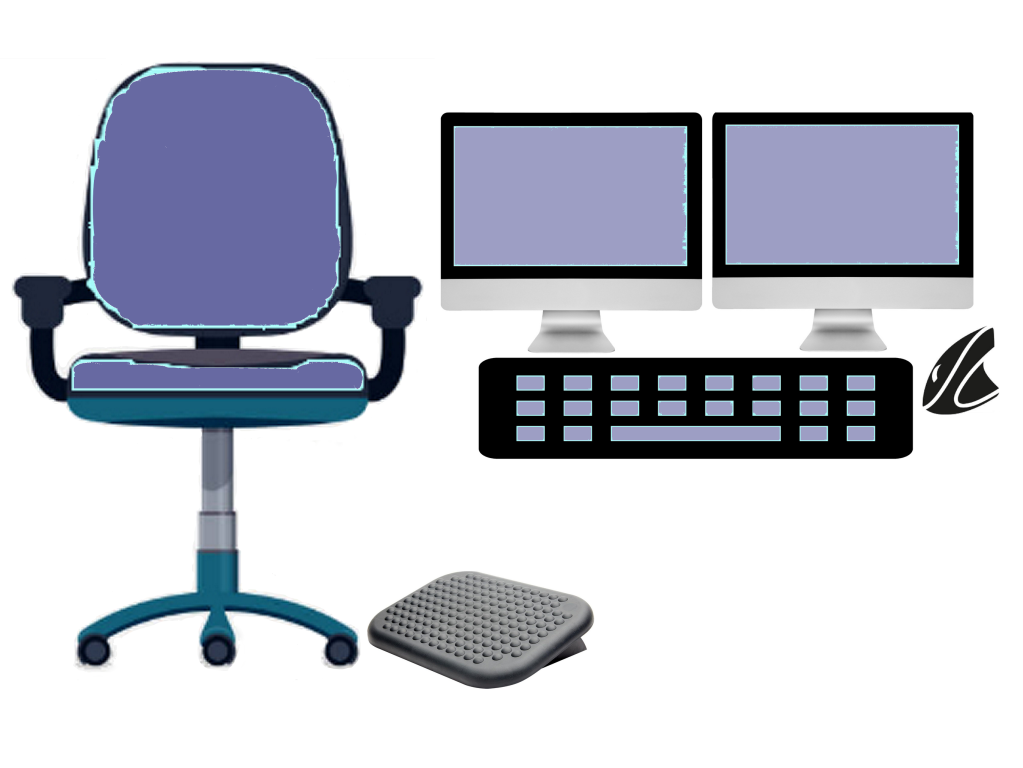
Last year I ran a survey to gain an overview of workstation set-ups and upper-body problems of language professionals, and to investigate how respondents counteract the physical impact of working long hours at the computer. I’ve reported my findings in two articles: one on workstation equipment and the other on upper-body pain and eye strain.
The graphical abstract below sums up the key results. Scroll to the bottom of the image to access the full articles.
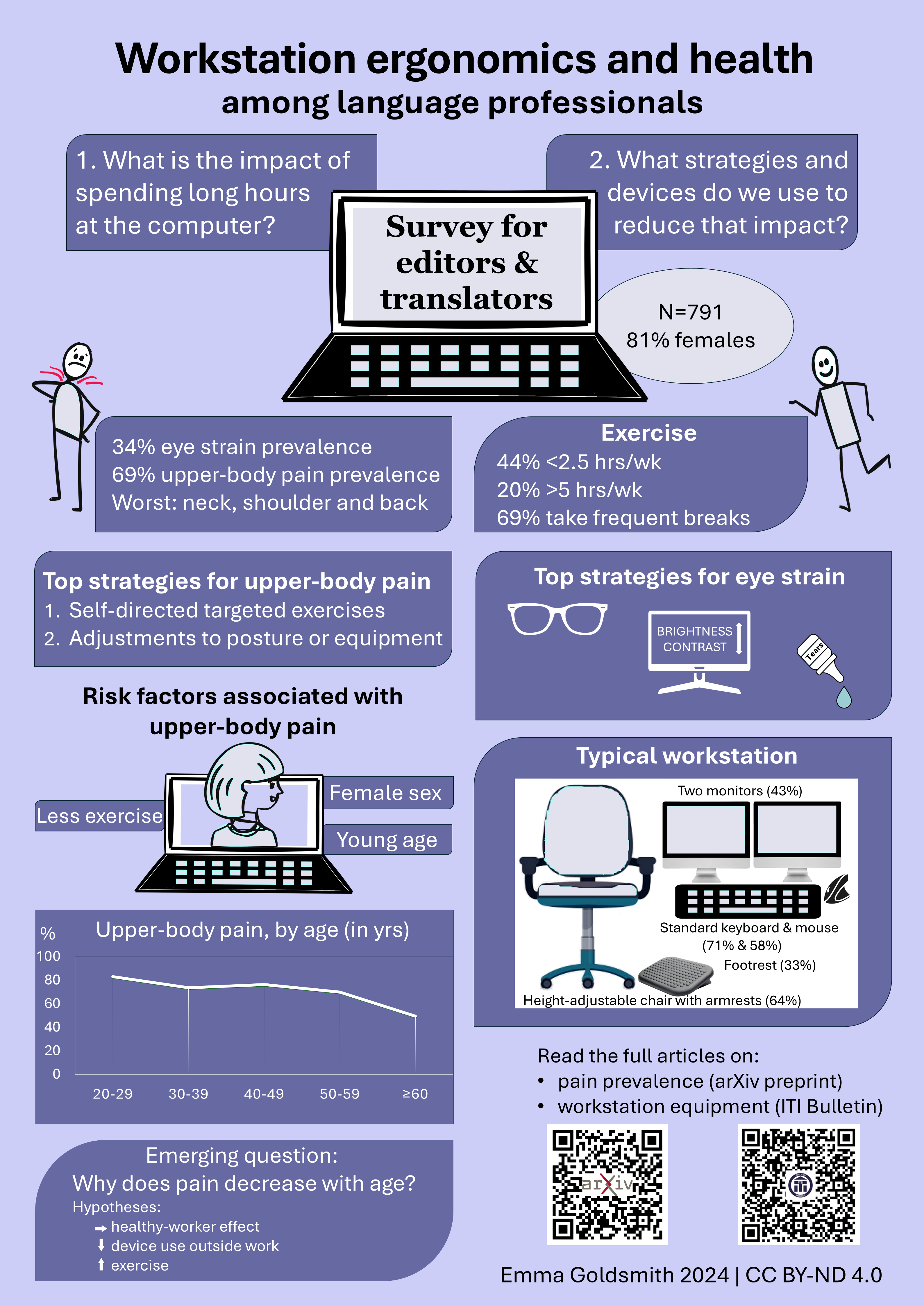
Links to the full articles:
- Upper-body musculoskeletal pain and eye strain among language professionals: a descriptive, cross-sectional study. Preprint on arXiv, submitted 29 Sept 2024
- Action Stations. ITI Bulletin, Nov-Dec 2023. (Reproduced with permission)
This research project has deepened my understanding of the challenges my author clients face – not least finding the time to write. I hope the detailed analysis in the limitations section of the preprint article helps guide other language professionals planning similar survey-based research in the future.
Finally, designing the graphical abstract was not only fun but also taught me new skills I can apply in my work. Visual formats to summarise findings are becoming increasingly popular among journals to engage readers, encourage discussion, and make findings more memorable. I hope I’ve achieved all three goals.


 Signs & Symptoms of Translation
Thanks for this! Interesting that the younger respondents had more aches and pains. The ITI Bulletin piece was fun to read and I’m now looking longingly at the Contour Design RollerMouse 😀
Agree about the Contour RollerMouse. I have one and use it sometimes. It’s VERY comfortable and quite a different experience from other mice. When I’m doing a lot of precision work (copying from pdfs, in particular) I find conventional mice more accurate, but that’s partly because of long years of experience with them.
Pingback: Around the web – October 2024 | A Smart Translator's Reunion